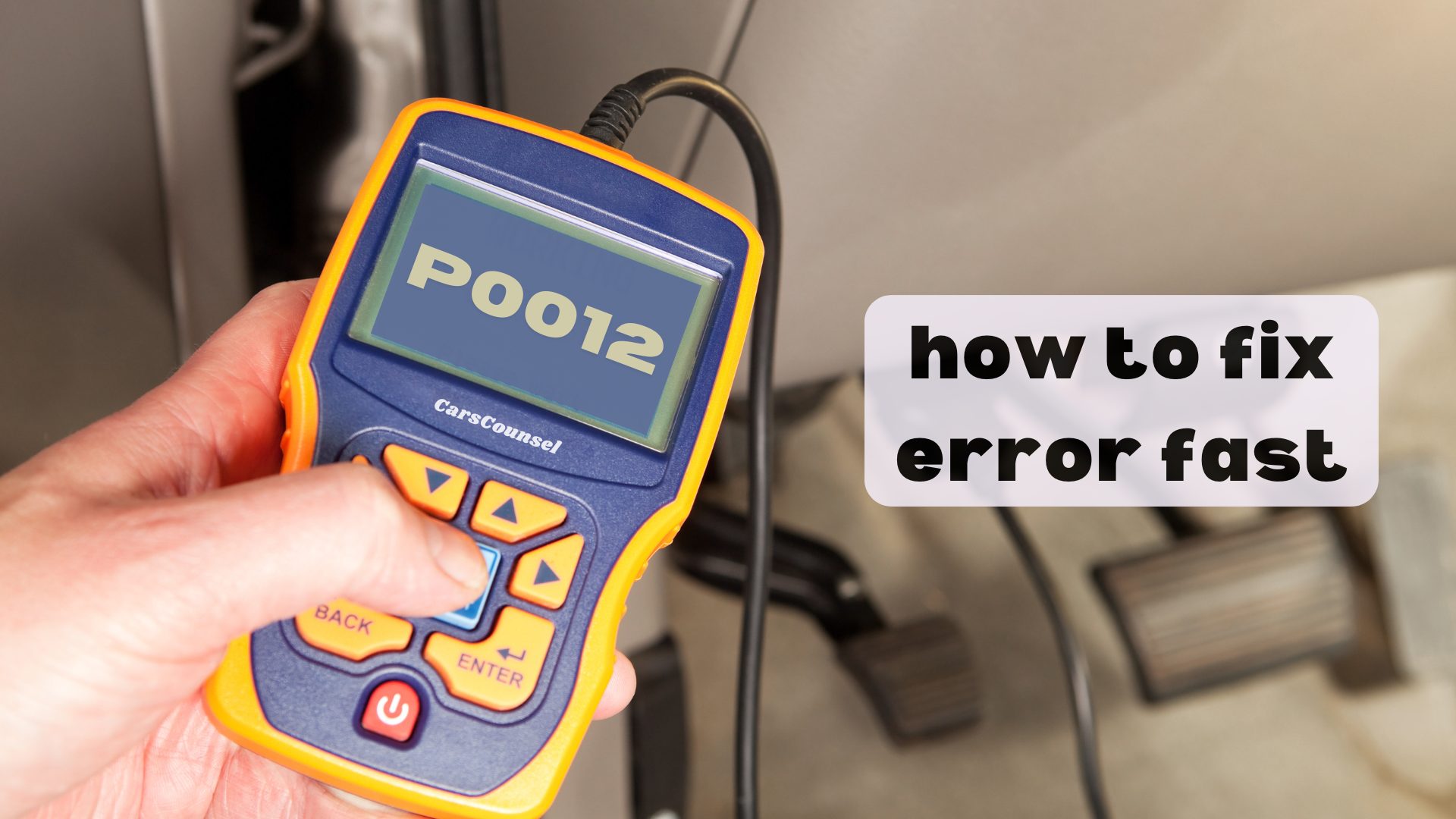
P0012 is a generic OBD-II diagnostic trouble code indicating that the intake camshaft position timing on Bank 1 is over-retarded compared to the powertrain control module’s command.
Because this code relates to the variable valve timing system, diagnosing it requires checking engine oil conditions, the VVT solenoid, and mechanical timing components.
Quick Navigation
Key Takeaways
- P0012 indicates the Bank 1 intake camshaft timing is over-retarded, meaning it is lagging behind the commanded position.
- Possible causes include low or dirty engine oil, a clogged VVT solenoid screen, a stuck oil control valve, or mechanical timing chain wear.
- Symptoms often include an illuminated check engine light, rough idling, hesitation during acceleration, and reduced fuel efficiency.
- Diagnosis requires verifying engine oil level and condition, testing the VVT solenoid circuit, and inspecting the timing chain and phaser.
P0012 Code Description and Implications
The powertrain control module continuously monitors the actual camshaft position against the target position. When P0012 sets, the module detects that the Bank 1 intake camshaft is consistently more retarded than commanded.
The variable valve timing system relies on engine oil pressure to advance or retard the camshaft. If the oil pressure is insufficient, the oil control valve is stuck, or the mechanical timing components are worn, the camshaft cannot reach the target angle.
Common Causes of the P0012 Code
Low or degraded engine oil: The VVT system requires clean oil at the correct pressure. Low oil levels or heavily degraded oil can prevent the phaser from advancing the camshaft.
Clogged VVT solenoid or screen: Debris or sludge can block the oil control valve or its filter screen, restricting oil flow to the VVT actuator.
Failed VVT phaser or actuator: Internal mechanical failure or wear within the camshaft phaser can prevent it from holding or changing the timing position.
Stretched timing chain or worn guides: Excessive mechanical slack in the timing chain can cause the physical relationship between the crankshaft and camshaft to fall out of the expected range.
Symptoms Associated With P0012
Because the camshaft timing directly affects valve overlap and cylinder scavenging, an over-retarded intake camshaft alters engine breathing.
You may experience rough idling, hesitation or stumbling during acceleration, and a noticeable decrease in fuel efficiency.
An illuminated check engine light will appear across all applications when this code is stored. In some cases, the engine may stall or be difficult to start.
Diagnosing the P0012 Trouble Code
Diagnosis must begin by checking engine oil before using a scan tool to retrieve the trouble code and monitor VVT data.
If the oil is full and clean, inspect the VVT solenoid connector and wiring. Use a scan tool to command the VVT solenoid while monitoring the camshaft position sensor data to see if the timing responds.
If the solenoid operates correctly but the timing does not change, the issue may be a clogged oil passage, a failed phaser, or a stretched timing chain requiring mechanical inspection.
Repairing the P0012 Issue
Repairs must follow confirmed diagnosis. If the oil is low or dirty, an oil and filter change may resolve the condition.
If the VVT solenoid is clogged or fails electrical testing, replace it with a component meeting the exact vehicle specification and verify the filter screen is clear.
If mechanical timing components like the chain, tensioner, or phaser are worn, they must be replaced according to the manufacturer’s timing procedures.
Cost Considerations for P0012 Repairs
Repair costs depend heavily on the confirmed root cause. An oil change or replacing an externally mounted VVT solenoid is generally straightforward.
If the timing chain, tensioners, or camshaft phaser require replacement, the repair involves significant labor and parts costs due to the extensive engine disassembly required.
Prevention Strategies for Future Occurrences
Maintaining the correct engine oil level and adhering to strict oil change intervals using the manufacturer-recommended oil viscosity helps prevent sludge buildup in the VVT system.
Using high-quality oil filters ensures that debris is captured before it can reach and clog the sensitive oil control valves and phaser screens.
Troubleshooting Tips and Best Practices
Always check the engine oil first. Assuming a P0012 code requires immediate major engine disassembly can lead to unnecessary repairs when a simple oil change or solenoid replacement is the actual fix.
Do not ignore related codes. If P0012 is accompanied by P0010 or P0011, it strongly supports an electrical issue or a systemic oil pressure problem.
Check for technical service bulletins related to updated VVT solenoid screens or revised timing chain kits for your specific model year.
More OBD-II Codes
| P0011 | P0010 | P0004 | P0003 |
| P0002 | P0001 | P0013 | P0014 |
| P0016 | P0017 | P0030 | P0031 |
| P0340 | P0335 | P0300 | P0301 |
| P0171 | P0174 | P0420 | P0430 |
| P0121 | P0131 | P0172 | P0170 |
Frequently Asked Questions
Is P0012 a generic or manufacturer-specific code?
P0012 is a generic OBD-II code. Its baseline definition is standardized across all vehicles, though specific diagnostic steps and VVT system designs vary by manufacturer.
Can low engine oil cause a P0012 code?
Yes. The variable valve timing system relies on engine oil pressure to adjust the camshaft. Low oil levels or severely degraded oil can prevent the camshaft from advancing, triggering this code.
Is it safe to drive with a P0012 code?
Driving short distances is generally safe, but an over-retarded camshaft reduces engine performance, causes rough idling, and lowers fuel efficiency. Prolonged driving with severe timing issues can cause further mechanical wear.
Will replacing the camshaft position sensor fix P0012?
Not usually. P0012 indicates the mechanical timing is over-retarded, not that the sensor circuit failed. The root cause is typically oil pressure, the VVT solenoid, or mechanical timing components.
Can a stretched timing chain trigger P0012?
Yes. If the timing chain stretches excessively or the tensioner fails, the physical relationship between the crankshaft and camshaft shifts. This mechanical slack can cause the camshaft to read as over-retarded.
What Should You Do About the P0012 Code?
Confirm the exact factory diagnostic procedure for your specific vehicle application. Inspect the engine oil level and condition, the VVT solenoid, and the mechanical timing components for wear or blockages.
Perform targeted electrical and mechanical testing on the relevant system and components to isolate the fault. Repair the confirmed root cause, then verify the repair by clearing the codes and monitoring live data.

