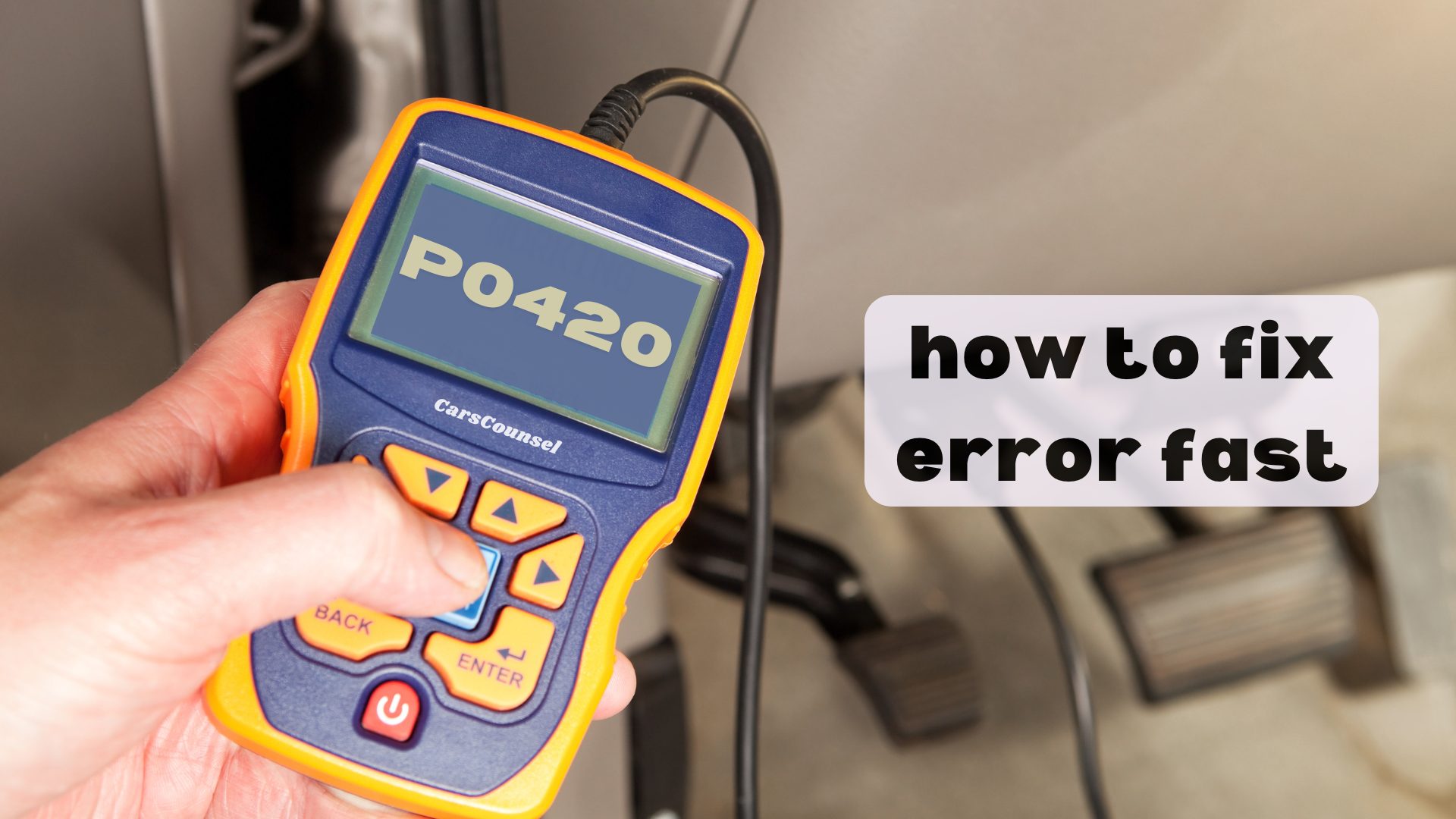
The P0420 code is a generic OBD-II powertrain code indicating that the catalyst system efficiency on Bank 1 is below the required threshold. This means the powertrain control module has detected that the catalytic converter is not reducing emissions as expected.
Because this code monitors overall system efficiency, it does not automatically prove the catalytic converter has failed. Exhaust leaks, faulty oxygen sensors, or engine misfires can also trigger this condition and must be ruled out first.
Quick Navigation
Key Takeaways
- P0420 indicates the catalytic converter on Bank 1 is not operating at the required efficiency level.
- The powertrain control module determines this by comparing the switching patterns of the upstream and downstream oxygen sensors.
- Possible causes include exhaust leaks, failed oxygen sensors, engine misfires, or a degraded catalytic converter.
- Diagnosis requires verifying the absence of exhaust leaks and engine performance issues before replacing the converter.
P0420 Code Description and Implications
The P0420 code is defined as “Catalyst System Efficiency Below Threshold (Bank 1).” It is a generic code applicable to all OBD-II compliant vehicles.
Bank 1 refers to the engine bank containing cylinder number one. The powertrain control module monitors the efficiency of the catalytic converter by comparing the upstream and downstream oxygen sensors.
A functioning catalyst stores oxygen, causing the downstream sensor signal to remain relatively steady. If the downstream sensor switches rapidly like the upstream sensor, the module determines the catalyst is inefficient and stores the P0420 code.
Common Causes of the P0420 Code
- Exhaust leaks before the catalytic converter or between the upstream and downstream oxygen sensors.
- A degraded, contaminated, or physically damaged catalytic converter.
- Faulty upstream or downstream oxygen sensors providing inaccurate data to the control module.
- Engine misfires allowing unburned fuel to enter the exhaust system and overheat the catalyst substrate.
- Excessive oil or coolant consumption contaminating the internal catalyst material.
Symptoms Associated With P0420
- Illuminated Check Engine Light.
- A sulfur or rotten egg smell from the exhaust if the catalyst is failing.
- Lack of power or restricted exhaust flow if the converter is physically clogged.
- In some cases, there are no noticeable drivability symptoms if the converter is simply degraded but not clogged.
Diagnosing the P0420 Trouble Code
Diagnosis must begin by checking for other diagnostic trouble codes, particularly misfire or fuel trim codes, and addressing them first.
Perform a thorough visual inspection of the exhaust system for leaks, which can introduce false air and skew oxygen sensor readings.
Use a scan tool to view live data and compare the upstream and downstream oxygen sensor waveforms at operating temperature.
If the downstream sensor mimics the upstream sensor, and no exhaust leaks or engine performance issues exist, the catalytic converter is likely degraded.
Repairing the P0420 Issue
Repairs must follow confirmed diagnosis. Do not replace components based on the code description alone.
- Weld or replace exhaust components to seal any confirmed leaks.
- Repair underlying engine issues, such as misfires or oil consumption, that may have damaged the catalyst.
- Replace confirmed failed oxygen sensors according to the manufacturer procedure.
- If the catalytic converter is confirmed failed and all other causes are ruled out, replace it with a component meeting the correct vehicle emissions specification.
Cost Considerations for P0420 Repairs
Cost depends on diagnostic time, component accessibility, required parts, and labor.
Repairing an exhaust leak or replacing an oxygen sensor involves moderate parts and labor expenses.
Replacing a catalytic converter involves significant parts and labor costs. Exact pricing varies by vehicle model, emissions configuration, and region.
Prevention Strategies for Future Occurrences
- Address engine misfires, rich fuel conditions, or oil consumption issues immediately to prevent contaminants from reaching the exhaust system.
- Use the exact engine oil specification required for your vehicle to prevent oil ash from contaminating the catalyst.
- Repair minor exhaust leaks before they cause false oxygen sensor readings.
Troubleshooting Tips and Best Practices
- Do not replace the catalytic converter based solely on the presence of a P0420 code without verifying the absence of exhaust leaks and engine misfires.
- If P0420 is accompanied by a P0430 code, it may indicate a systemic issue affecting both engine banks, such as severe oil consumption or a fuel delivery problem.
- Check for applicable technical service bulletins for your exact vehicle, as some manufacturers release updated software calibrations to address false catalyst efficiency codes.
More OBD-II Codes
| P0411 | P0340 | P0335 | P0325 |
| P0300 | P0206 | P0430 | P0440 |
| P0441 | P0442 | P0444 | P0445 |
| P0171 | P0174 | P0172 | P0170 |
| P0301 | P0302 | P0303 | P0304 |
| P0305 | P0306 | P0135 | P0138 |
Frequently Asked Questions
Is P0420 a generic or manufacturer-specific code?
P0420 is a generic OBD-II code. Its definition regarding Bank 1 catalyst system efficiency below threshold is standardized across all compliant vehicles.
Can an exhaust leak cause a P0420 code?
Yes. Exhaust leaks before or between the oxygen sensors can introduce false air, skewing the sensor readings and causing the control module to incorrectly calculate catalyst efficiency.
Will a bad oxygen sensor cause a P0420 code?
A faulty oxygen sensor can provide inaccurate data, triggering the code. However, the sensor must be tested to confirm failure, as a degraded catalytic converter is also a verified cause.
Is it safe to drive with a P0420 code?
It depends on the symptoms. If the engine is misfiring or the converter is physically clogged and restricting exhaust flow, driving it may cause severe mechanical damage.
Can a tune-up fix a P0420 code?
A tune-up may resolve the issue if engine misfires caused the catalyst to overheat. If the catalyst substrate is already permanently damaged or contaminated, a tune-up will not restore its efficiency.
What Should You Do About the P0420 Code?
Confirm the absence of exhaust leaks and engine misfires first. Follow the applicable manufacturer diagnostic procedure to compare oxygen sensor data and verify the condition of the catalyst. Address the relevant system and components, verify the repair, and then clear the codes.


Comments are closed.