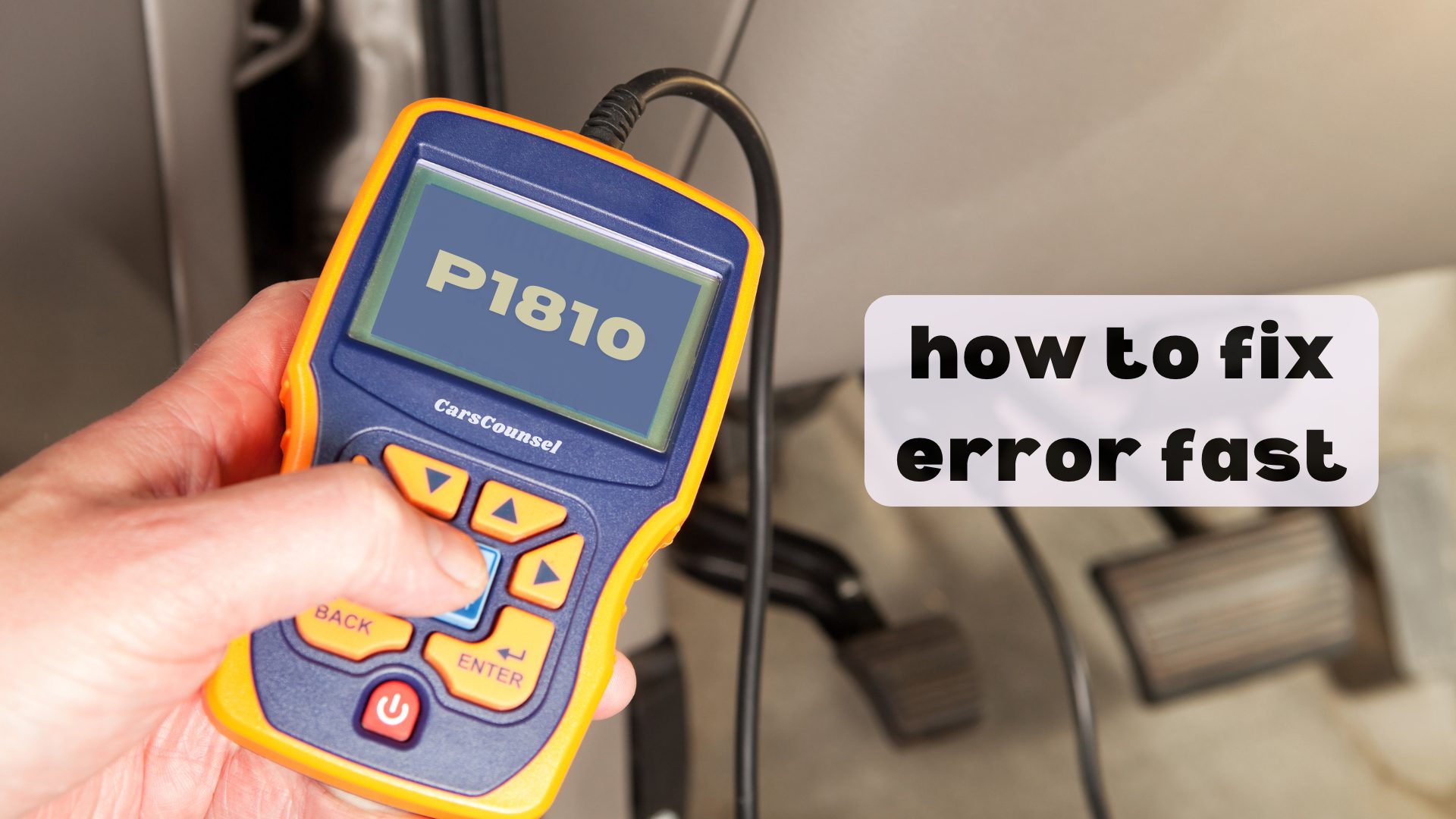
Among OBD-II OBD2 error codes, P1810 is a manufacturer-specific definition indicating a Transmission Fluid Pressure (TFP) Valve Position Switch Circuit fault. It means the control module detected an illogical signal from the internal pressure switches.
Because this code is manufacturer-specific, exact application verification is required. The code indicates a circuit or switch condition, and testing is necessary to isolate the fault to the switch assembly, wiring, or internal transmission hydraulic pressure.
Quick Navigation
Key Takeaways
- Condition detected: The PCM identified an invalid or illogical signal from the Transmission Fluid Pressure (TFP) valve position switch circuit.
- Electrical and hydraulic checks: Diagnosis involves testing the switch resistance, inspecting the transmission wiring harness, and verifying internal line pressures.
- System impacts: A faulty TFP switch can cause harsh shifts, limp mode, or incorrect gear engagement because the PCM cannot verify the actual hydraulic state.
- Component testing: The TFP switch assembly, internal transmission wiring, and external harness must be evaluated to isolate the root cause.
P1810 Code Description and Implications
P1810 is a manufacturer-specific definition, most commonly associated with General Motors vehicles, for Transmission Fluid Pressure Valve Position Switch Circuit. The TFP switch assembly contains multiple pressure switches that monitor hydraulic line pressure in various clutch circuits.
By reading which switches are open or closed, the powertrain control module determines which gear the transmission is actually in. When the module detects a combination of switch states that is mechanically impossible, it stores P1810.
Common Causes of the P1810 Code
- Failed TFP switch assembly: The internal pressure switches or the integrated transmission fluid temperature sensor may fail, sending incorrect signals to the PCM.
- Damaged internal wiring: The wiring harness inside the transmission pan that connects the TFP switch to the case connector can become brittle, chafed, or broken due to heat and fluid exposure.
- Corroded case connector: The external electrical connector on the transmission case can suffer from moisture intrusion, causing terminal corrosion or poor pin contact.
- Internal hydraulic issues: Low transmission fluid level, a clogged filter, or a failing transmission pump can cause actual pressure drops that confuse the switch readings.
Symptoms Associated With P1810
Possible symptoms include:
- Illuminated Check Engine Light (MIL).
- Harsh, erratic, or delayed transmission shifting.
- Transmission entering limp mode or defaulting to a single gear.
- Torque converter clutch failing to engage or disengage properly.
- Incorrect gear indication on the dashboard shift indicator.
Diagnosing the P1810 Trouble Code
Diagnosing a TFP switch circuit code requires a digital multimeter, a scan tool capable of reading transmission pressure switch data, and the vehicle’s specific wiring diagrams. The first step is to verify the exact factory definition.
- Monitor live data: Use a scan tool to view the TFP switch states while shifting through the gears. Verify if the switch states match the commanded gear.
- Visual inspection: Inspect the external transmission case connector and wiring harness for chafing, heat damage, or corrosion.
- Test the switch resistance: Disconnect the case connector and measure the resistance across the TFP switch pins according to the manufacturer’s specification.
- Check internal wiring: If the external circuit tests correctly, the internal wiring harness or the TFP switch assembly inside the transmission pan may require inspection.
Repairing the P1810 Issue
Repairs must follow confirmed diagnosis. Never replace the transmission or powertrain control module based solely on the presence of a P1810 code.
- TFP switch replacement: If the switch assembly fails resistance testing or live data monitoring, replace the TFP switch. This requires removing the transmission pan and filter.
- Internal wiring repair: If the internal harness is damaged, replace the internal transmission wiring harness.
- Fluid and filter service: Whenever the transmission pan is removed, perform a transmission fluid and filter service using the correct fluid specification.
- Connector replacement: If the external case connector is corroded, replace the pigtail or the entire case connector assembly.
Cost Considerations for P1810 Repairs
Cost depends on diagnostic time, component accessibility, required parts, programming requirements, and labor. Replacing the TFP switch requires dropping the transmission pan, which adds fluid and filter costs to the repair.
Prevention Strategies for Future Occurrences
- Maintain fluid levels: Regularly check the transmission fluid level and condition to prevent internal hydraulic issues that can affect switch operation.
- Follow service intervals: Replace the transmission fluid and filter at the manufacturer’s recommended intervals to prevent debris from clogging the valve body or damaging the internal switches.
Troubleshooting Tips and Best Practices
- Do not replace the pressure control solenoid first: P1810 specifically targets the TFP valve position switch circuit, not the pressure control solenoid. Always verify the switch data and circuit integrity first.
- Check for related codes: Look for transmission fluid temperature sensor codes or shift solenoid codes, as these components often share the same internal wiring harness.
- Check for TSBs: Some manufacturers issue Technical Service Bulletins for updated internal wiring harnesses or revised TFP switch designs to address chronic failures.
More OBD-II Codes
| P1777 | P1778 | P1780 | P1790 |
| P1800 | P1807 | P1811 | P1815 |
| P1843 | P1859 | P1860 | P1861 |
| P0745 | P0748 | P0751 | P0753 |
| P0700 | P0715 | P0720 | P0730 |
| P0740 | P0741 | P0742 | P0743 |
Frequently Asked Questions
Can a bad transmission fluid temperature sensor cause a P1810 code?
Yes. On many applications, the transmission fluid temperature sensor is integrated into the TFP switch assembly. If the temperature sensor fails or its circuit shorts, it can disrupt the entire assembly’s signal, triggering the P1810 code.
Is it safe to drive with a P1810 code?
Driving is not recommended for long distances. A faulty TFP switch prevents the PCM from verifying the actual gear engaged, which can cause harsh shifts, limp mode, or unexpected neutral conditions, potentially leading to unsafe driving situations.
Will changing the transmission fluid fix a P1810 code?
Not usually. P1810 indicates an electrical or switch failure in the TFP circuit. While dirty fluid can cause mechanical valve body issues, it will not repair a failed internal pressure switch or a broken internal wiring harness.
Does P1810 mean my transmission needs to be rebuilt?
No. The TFP switch and its internal wiring harness are typically located inside the transmission pan. Replacing the switch or internal harness can usually be done without removing or rebuilding the entire transmission.
Can a P1810 code cause the torque converter to shudder?
Yes. If the PCM cannot read the TFP switches correctly, it may fail to properly modulate the torque converter clutch apply pressure. This can cause the clutch to engage erratically, resulting in a noticeable shudder during highway cruising.
What Should You Do About the P1810 Code?
Because the P1810 code indicates a fault in the Transmission Fluid Pressure valve position switch circuit, it requires verifying the switch data, internal wiring, and external connectors before replacing components. Confirm the exact factory definition for your vehicle.
Inspect the transmission case connector, check the internal harness, and test the relevant system and components. Follow the manufacturer’s diagnostic procedure to isolate the faulty component, repair the confirmed root cause, and verify the repair.

