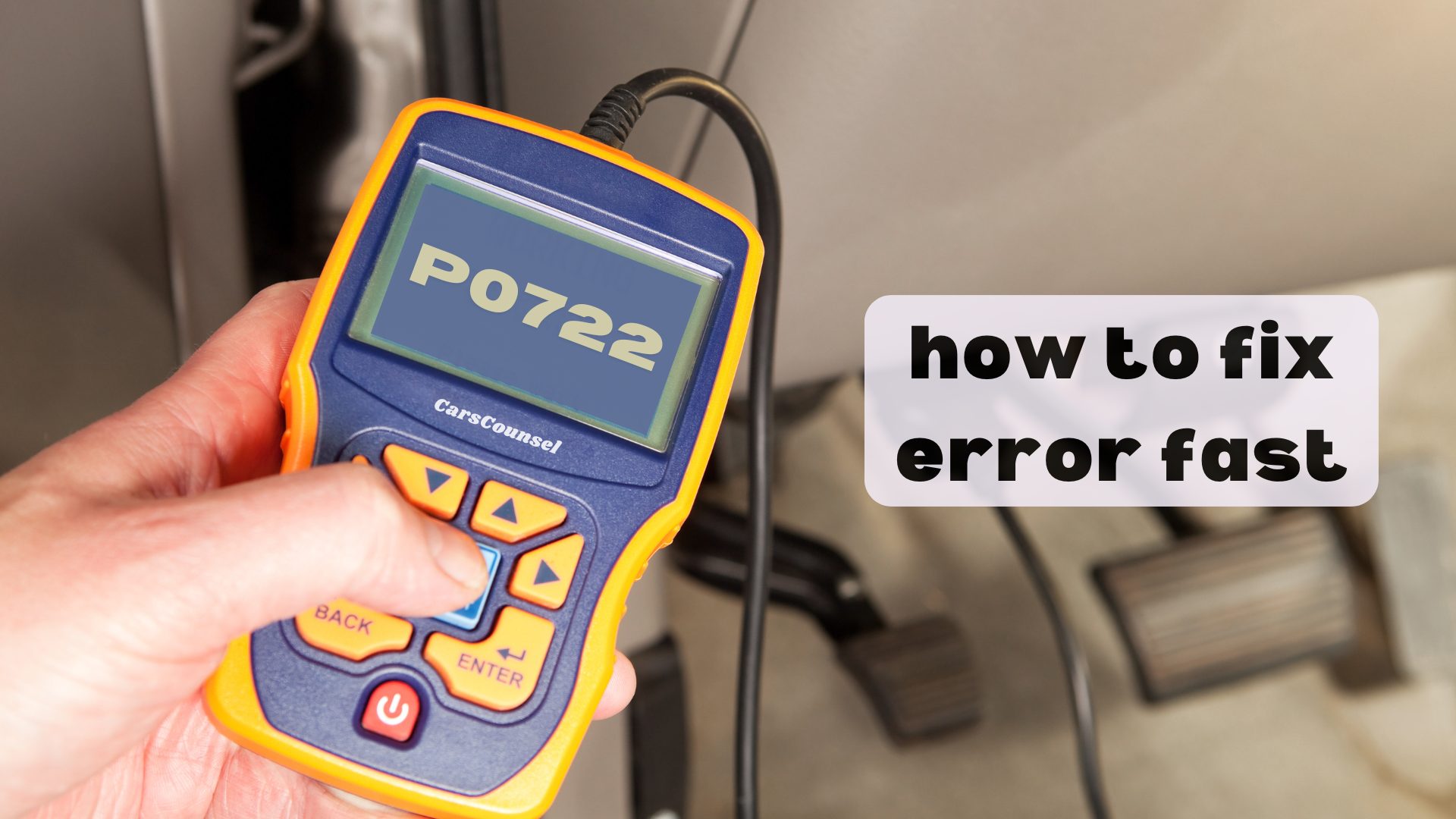
The P0722 code is a generic OBD-II diagnostic trouble code indicating “Output Speed Sensor Circuit No Signal.” It means the powertrain or transmission control module detected a complete loss of signal from the output speed sensor.
This code does not automatically prove the sensor has failed. The diagnostic path requires verifying the wiring, connectors, and sensor signal before replacing any components.
Quick Navigation
Key Takeaways
- The P0722 code indicates the control module received no signal from the transmission output speed sensor while the vehicle was in motion.
- Possible causes include a failed output speed sensor, open or shorted wiring, damaged connectors, or a damaged reluctor ring.
- Diagnosis involves inspecting the sensor circuit, measuring resistance or signal voltage, and checking live data with a scan tool.
- Repairs may involve repairing wiring, replacing the sensor, or addressing internal transmission mechanical issues.
P0722 Code Description and Implications
The P0722 code indicates that the control module detected no signal from the output speed sensor circuit. This is a generic OBD2 code applicable to many vehicles with electronic automatic transmissions.
The control module uses the output speed sensor to determine vehicle speed, calculate shift points, and control torque converter clutch lockup. It compares this data against the input speed sensor and engine RPM.
When the module commands a gear and the vehicle is moving, but the output speed sensor returns zero or no signal, it stores this code and may trigger a fail-safe mode.
Common Causes of the P0722 Code
A failed output speed sensor is a possible cause. Internal electrical failure within the sensor will prevent it from generating the necessary AC voltage or digital square wave signal.
Wiring faults frequently cause this code. An open circuit, a short to ground, or a short to voltage in the harness between the sensor and the control module will interrupt the signal.
Corroded, loose, or fluid-contaminated electrical connectors at the sensor or the transmission harness pigtail can also break the circuit connection.
In some applications, physical damage to the reluctor ring or tone wheel on the transmission output shaft will prevent the sensor from reading rotational speed, even if the sensor itself is functional.
Symptoms Associated With P0722
An illuminated Check Engine Light is expected once the monitor detects the missing signal. MIL behavior varies by application, but the light commands when the fault is verified.
The speedometer may become erratic, drop to zero, or stop functioning entirely, as it relies on the output speed sensor data for vehicle speed calculations.
Transmission shifting may become harsh, delayed, or erratic. The control module may disable torque converter clutch lockup or force the transmission into a default limp mode gear to prevent damage.
Diagnosing the P0722 Trouble Code
Diagnosis must begin by verifying the exact factory definition and checking for related input or output speed sensor codes. Record freeze-frame data to see the vehicle speed and engine RPM when the code set.
Inspect the transmission fluid level and condition. While low fluid does not directly cause an electrical “no signal” code, severe internal mechanical failure could damage the reluctor ring.
Visually inspect the output speed sensor wiring and connectors for chafing, breaks, corrosion, or transmission fluid intrusion. Repair any obvious wiring faults.
Test the sensor according to the manufacturer procedure. For magnetic reluctance sensors, measure the resistance and compare it to specifications. For Hall-effect sensors, check for reference voltage, ground, and a toggling signal wire using a multimeter or oscilloscope.
Repairing the P0722 Issue
Repairs must follow confirmed diagnosis. If the wiring and connectors are intact but the sensor fails the manufacturer electrical tests, replace the output speed sensor using a component meeting the exact vehicle specification.
If the wiring harness is found to be broken or shorted, repair the circuit and secure the harness to prevent future rubbing or damage.
If the sensor and wiring test correctly but no signal is generated while the output shaft is physically turning, the transmission may need to be inspected for a damaged reluctor ring or internal mechanical failure.
Cost Considerations for P0722 Repairs
Cost depends on diagnostic time, component accessibility, required parts, programming requirements, and labor.
Replacing an externally mounted output speed sensor involves moderate parts and minimal labor. If the sensor is located inside the transmission pan or requires valve body removal, labor costs will increase.
Repairing broken wiring or addressing internal mechanical damage to the reluctor ring will significantly affect the overall repair cost.
Prevention Strategies for Future Occurrences
Inspecting exposed transmission wiring harnesses and sensor connectors for physical damage or moisture intrusion may help prevent intermittent or open circuit faults.
Keeping the transmission fluid at the proper level and in good condition helps maintain overall transmission health, though it may not prevent external electrical sensor failures.
Some sensor failures occur due to normal internal aging and cannot be reliably prevented through standard maintenance.
Troubleshooting Tips and Best Practices
Do not automatically replace the output speed sensor without verifying the circuit integrity. A broken wire or corroded connector will cause the exact same “no signal” symptom as a dead sensor.
Always check the input speed sensor data alongside the output speed sensor. If both sensors drop out simultaneously, the fault may lie in a shared power supply, ground circuit, or the control module itself.
Consult manufacturer technical service bulletins for your exact vehicle application, as some models have known issues with specific transmission harness connectors or sensor mounting seals.
More OBD-II Codes
| P0708 | P0713 | P0714 | P0715 |
| P0716 | P0717 | P0723 | P0725 |
| P0726 | P0727 | P0730 | P0731 |
| P0720 | P0721 | P0500 | P0501 |
| P0700 | U0101 | P0740 | P0741 |
| P0300 | P0420 | P0171 | P0455 |
Frequently Asked Questions
Is the P0722 code generic or manufacturer-specific?
The P0722 code is a generic SAE OBD-II diagnostic trouble code. However, the exact sensor type, testing specifications, and location vary by manufacturer and transmission model.
Can a bad speedometer cause a P0722 code?
No. The speedometer receives its data from the control module, which reads the output speed sensor. A faulty speedometer cluster will not cause the control module to set a sensor circuit code.
Will a P0722 code put my car in limp mode?
It can. Without accurate output speed data, the control module cannot safely calculate shift points or torque converter lockup, often triggering a fail-safe or limp mode.
Can I clear the P0722 code without fixing the problem?
Clearing the code only resets the warning light. If the underlying wiring fault or failed sensor remains, the monitor will detect the missing signal immediately and turn the light back on.
Does a P0722 code mean I need a new transmission?
Not necessarily. While internal mechanical damage to the reluctor ring is a possible cause, the code is frequently caused by a failed external sensor or damaged wiring. Proper circuit testing is required first.
What Should You Do About the P0722 Code?
Confirm the exact factory definition and sensor type for your specific vehicle application. Follow the applicable manufacturer diagnostic procedure to verify whether the fault lies in the wiring, the sensor itself, or internal mechanical components.
Once testing confirms the root cause, repair or replace the confirmed failed component, then retest the transmission operation to ensure a valid speed signal is present across all gears.

