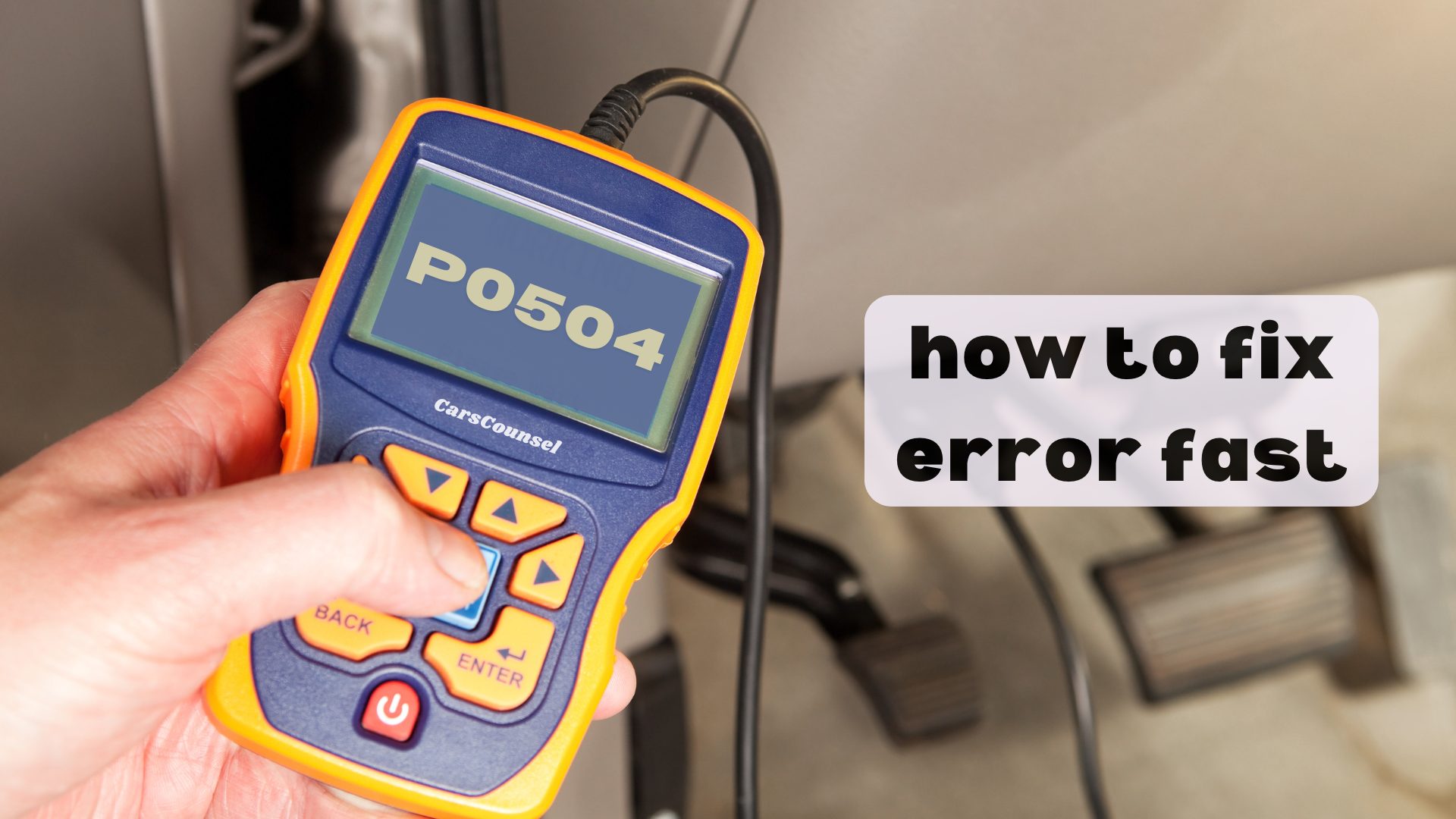
Among OBD2 error definitions, P0504 is a generic SAE code indicating a Brake Switch A/B Correlation fault. It means the powertrain control module detected conflicting signals from the brake pedal sensor.
Because this code monitors safety-critical circuits, the exact diagnostic path requires verifying the switch adjustment and testing the dual signal circuits. The code alone does not prove the switch has failed.
Quick Navigation
Key Takeaways
- Condition detected: The PCM identified an illogical correlation between the two internal circuits of the brake pedal position sensor.
- Safety systems affected: This fault can disable cruise control, affect torque converter lockup, and impact the brake-shift interlock.
- Electrical and mechanical checks: Diagnosis involves verifying brake light operation, checking switch adjustment, and testing the signal circuits.
- Component testing: The brake light switch, wiring harness, and related fuses must be evaluated to isolate the root cause.
P0504 Code Description and Implications
P0504 is a generic SAE definition for Brake Switch A/B Correlation. Modern vehicles use a brake pedal position sensor with two internal switches that operate inversely or in a specific sequence.
The powertrain control module monitors both signals to verify the brake pedal position. This redundancy is critical for safety systems like cruise control disengagement and torque converter clutch operation.
When the module detects that the two signals do not correlate logically over a specific drive cycle, it stores P0504. This indicates a circuit fault, misadjustment, or switch failure.
Common Causes of the P0504 Code
- Misadjusted brake light switch: If the switch is not positioned correctly against the brake pedal tang, it may not trigger both circuits in the correct sequence.
- Failed brake light switch: The internal contacts of the dual-circuit switch may wear out or fail, sending erratic signals to the control module.
- Damaged wiring or connectors: Chafed wires, corrosion, or loose pins at the switch connector can disrupt one of the signal circuits.
- Blown fuse: A blown brake light or control module fuse can cause one circuit to read inactive, triggering a correlation fault.
- Aftermarket pedal accessories: Thick floor mats or aftermarket pedal covers can interfere with the switch plunger’s full travel or pedal return.
Symptoms Associated With P0504
Possible symptoms include:
- Illuminated Check Engine Light (MIL).
- Inoperative cruise control, as the module cannot safely verify brake pedal application.
- Torque converter clutch failing to lock or unlock, leading to poor fuel economy or harsh shifting.
- Brake-shift interlock issues, preventing the vehicle from shifting out of Park.
- Brake lights staying on constantly or failing to illuminate properly.
Diagnosing the P0504 Trouble Code
Diagnosing a brake switch correlation code requires a scan tool capable of reading live data, a digital multimeter, and the vehicle’s specific wiring diagrams. The first step is to verify the exact factory definition.
A professional diagnostic workflow includes:
- Verify brake lights: Have an assistant press the brake pedal while you check if the brake lights illuminate and extinguish properly.
- Check switch adjustment: Inspect the physical gap between the brake pedal tang and the switch plunger. Adjust or replace the retaining clip if necessary.
- Monitor live data: Use a scan tool to view the Brake Switch A and Brake Switch B PIDs while pressing the pedal to verify they change states inversely.
- Test circuits: If live data is erratic, use a multimeter to test the reference voltage, ground, and signal circuits at the switch connector.
Repairing the P0504 Issue
Repairs must follow confirmed diagnosis. Never replace the powertrain control module based solely on the presence of a P0504 code.
- Switch adjustment: If the switch is misadjusted, reposition it to the correct specification and secure the locking mechanism.
- Switch replacement: If the internal contacts fail testing or the switch is physically broken, replace it with a component meeting the correct vehicle specification.
- Wiring repair: Repair any chafed wires or corroded connectors found during the circuit inspection.
- Clear and retest: Clear the codes and test drive the vehicle to verify the PCM registers proper brake switch correlation.
Cost Considerations for P0504 Repairs
The cost to resolve a P0504 code depends heavily on the root cause, diagnostic time, and component accessibility.
A simple switch replacement or adjustment is generally minimal in cost. Tracking down an intermittent wiring break or replacing a complex pedal assembly requires more diagnostic time and labor.
Prevention Strategies for Future Occurrences
While internal switch failures are not always predictable, you can protect the system from common physical interference.
- Check floor mats: Ensure heavy or stacked floor mats are not sliding forward and interfering with the brake pedal’s full return or the switch plunger.
- Inspect during service: When performing brake pad or rotor service, visually check the brake light switch and wiring for damage or misalignment.
Troubleshooting Tips and Best Practices
- Do not ignore brake light operation: A correlation code often stems from a simple blown fuse or burnt-out brake light bulb creating an open circuit. Always check the bulbs and fuses first.
- Check for TSBs: Some manufacturers issue Technical Service Bulletins for updated brake light switch designs or revised PCM software to address chronic correlation faults.
- Verify pedal return: A weak brake pedal return spring can cause the pedal to not fully retract, keeping the switch slightly depressed and causing a correlation fault.
More OBD-II Codes
| P0304 | P0420 | P0430 | P0500 |
| P0501 | P0502 | P0505 | P0506 |
| P0520 | P0521 | P0522 | P0523 |
| P0571 | P0572 | P0573 | P0703 |
| P0700 | P0705 | P0706 | P0707 |
| P0708 | P0711 | P0713 | P0715 |
Frequently Asked Questions
Can a bad brake light bulb cause a P0504 code?
Yes. On some vehicles, the brake switch circuit passes through the bulbs to ground. A blown bulb can create an open circuit on one side of the switch, causing the module to detect a correlation fault.
Is it safe to drive with a P0504 code?
You can typically drive the vehicle, but safety systems like cruise control and torque converter lockup may be disabled. Additionally, your brake lights may not function correctly, creating a hazard for drivers behind you.
Will adjusting the brake pedal fix a P0504 code?
If the switch is misadjusted relative to the pedal tang, adjusting the switch position or pedal stop can restore proper correlation. However, if the internal contacts are worn, the switch itself must be replaced.
Does P0504 mean my PCM needs to be replaced?
No. P0504 indicates a correlation fault in the switch circuits. The root cause is usually a misadjusted switch, failed switch, blown fuse, or wiring issue. The PCM should only be considered after verifying circuit integrity.
Can aftermarket floor mats trigger a P0504 code?
Yes. Thick or improperly secured floor mats can bunch up under the brake pedal. This prevents the pedal from fully returning, keeping the switch partially engaged and causing a continuous correlation fault.
What Should You Do About the P0504 Code?
Because the P0504 code indicates a correlation fault in the brake switch circuits, it requires verifying the physical switch adjustment and testing the dual signal paths. Confirm the exact factory definition for your vehicle.
Inspect the brake lights, fuses, and switch alignment. Test the signal circuits and monitor live data. Follow the manufacturer’s diagnostic procedure to isolate the faulty component, repair the confirmed root cause, and verify the repair.

