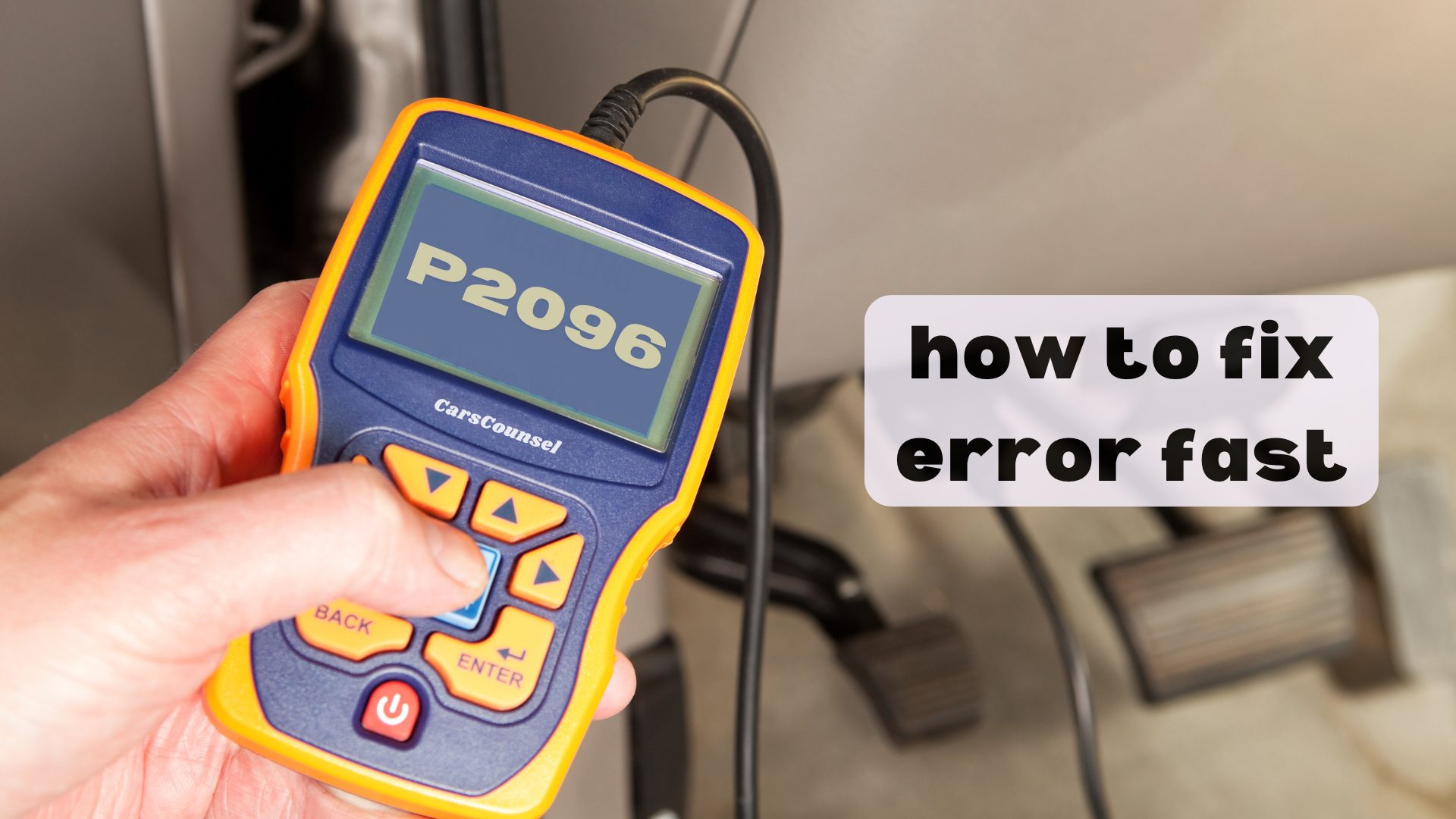
P2096 is a generic OBD-II powertrain code indicating that the post-catalyst fuel trim system on Bank 1 is running too lean. This means the engine control module detects excessive oxygen in the exhaust after the catalytic converter.
Because this code monitors overall system efficiency, it does not automatically prove a specific sensor has failed. Exhaust leaks, fuel delivery issues, or faulty oxygen sensors must be tested and ruled out first.
Quick Navigation
Key Takeaways
- P2096 indicates the downstream oxygen sensor on Bank 1 detects a lean exhaust condition after the catalytic converter.
- Possible causes include exhaust leaks near the sensor, low fuel pressure, vacuum leaks, or a failing oxygen sensor.
- Diagnosis requires inspecting the exhaust system for leaks and verifying fuel pressure and sensor data before replacing parts.
- Addressing the root cause is required, as simply clearing the code will not fix the underlying mechanical or fueling fault.
P2096 Code Description and Implications
The P2096 code is defined as “Post Catalyst Fuel Trim System Too Lean Bank 1.” It is a generic code applicable to all OBD-II compliant vehicles.
Bank 1 refers to the engine bank containing cylinder number one. The engine control module monitors the downstream oxygen sensor or air-fuel ratio sensor located after the catalytic converter.
If the sensor detects a persistently lean condition, the module determines the post-catalyst fuel trim has exceeded its maximum rich adjustment limit and stores the P2096 code.
Common Causes of the P2096 Code
- Exhaust leaks upstream of or near the downstream oxygen sensor, allowing false air to enter the exhaust stream.
- Low fuel pressure caused by a failing fuel pump, clogged fuel filter, or malfunctioning fuel pressure regulator.
- Lean fuel injectors or clogged injector passages restricting fuel delivery to the cylinders.
- Intake vacuum leaks introducing unmetered air into the combustion chambers.
- A faulty downstream oxygen sensor providing inaccurate lean readings to the control module.
- Contaminated or degraded mass airflow sensor miscalculating the incoming air volume.
Symptoms Associated With P2096
- Illuminated Check Engine Light.
- Potential hesitation or lack of power during acceleration if the engine is genuinely running lean.
- Rough idle or engine misfires in severe lean conditions.
- In some cases, there are no noticeable drivability symptoms if the issue is an exhaust leak or a faulty sensor rather than a true lean condition.
Diagnosing the P2096 Trouble Code
Diagnosis must begin by checking for other OBD2 codes, such as fuel trim or misfire codes, and addressing them first.
Perform a thorough visual and smoke inspection of the exhaust system from the manifold to the downstream oxygen sensor to identify any leaks that could draw in ambient air.
Verify fuel pressure using a mechanical gauge and compare it to the manufacturer specification.
Use a scan tool to monitor live data, observing the downstream oxygen sensor voltage or air-fuel ratio, and check for proper switching and response to induced rich or lean conditions.
Repairing the P2096 Issue
Repairs must follow confirmed diagnosis. Do not replace components based on the code description alone.
- If an exhaust leak is confirmed near the sensor, weld or replace the affected exhaust piping or gaskets.
- If fuel pressure is low, replace the confirmed failed fuel pump, filter, or pressure regulator.
- If the downstream oxygen sensor fails electrical testing or cross-testing with the opposite bank, replace it with a component meeting the correct vehicle specification.
Cost Considerations for P2096 Repairs
Cost depends on diagnostic time, component accessibility, required parts, and labor.
Repairing an exhaust leak or replacing a downstream oxygen sensor involves moderate parts and labor expenses.
Replacing a fuel pump or addressing internal fuel injector issues requires significantly more labor and parts costs. Exact pricing varies by vehicle model and region.
Prevention Strategies for Future Occurrences
- Follow the manufacturer’s recommended intervals for fuel filter replacement to prevent flow restrictions.
- Use high-quality fuel and consider periodic fuel system cleaning to prevent injector deposits.
- Address exhaust leaks or check engine lights related to air-fuel mixture promptly to prevent long-term catalyst or sensor damage.
Troubleshooting Tips and Best Practices
- Do not replace the downstream oxygen sensor based solely on the presence of a P2096 code. Exhaust leaks are a verified cause of false lean readings.
- If P2096 is accompanied by a P2097 code on the same bank, it indicates a conflicting sensor reading or severe fueling issue that requires immediate system verification.
- Always verify the exact physical location of Bank 1 for your specific engine layout before performing sensor tests or exhaust inspections.
More OBD-II Codes
| P2002 | P2004 | P2005 | P2006 |
| P2007 | P2008 | P2097 | P2098 |
| P2099 | P0171 | P0174 | P0172 |
| P0170 | P0173 | P0420 | P0430 |
| P0135 | P0131 | P0132 | P0133 |
| P0137 | P0140 | P0150 | P0155 |
Frequently Asked Questions
Is P2096 a generic or manufacturer-specific code?
P2096 is a generic OBD-II code. Its definition regarding the post-catalyst fuel trim system running too lean on Bank 1 is standardized across all compliant vehicles.
Can an exhaust leak cause a P2096 code?
Yes. An exhaust leak upstream of or near the downstream oxygen sensor allows ambient air to enter the exhaust stream. This skews the sensor reading lean, triggering the code without a true fueling issue.
Will a bad catalytic converter cause a P2096 code?
A failing catalytic converter typically triggers efficiency codes like P0420. While severe catalyst damage could theoretically affect downstream readings, P2096 is primarily caused by exhaust leaks, fuel delivery issues, or faulty oxygen sensors.
Is it safe to drive with a P2096 code?
It depends on the symptoms. If the engine is genuinely running lean and experiencing misfires or severe power loss, driving it may cause internal engine damage. If it is merely an exhaust leak, it is less critical.
Can a vacuum leak cause a P2096 code?
Yes. An intake vacuum leak introduces unmetered air into the combustion chambers, causing the engine to run lean. The upstream sensors adjust fuel trims, which can eventually max out the downstream post-catalyst fuel trims and trigger P2096.
What Should You Do About the P2096 Code?
Confirm the condition of the exhaust system and fuel delivery first. Follow the applicable manufacturer diagnostic procedure to test for exhaust leaks, verify fuel pressure, and check sensor data. Address the relevant system and components, verify the repair, and then clear the codes.

