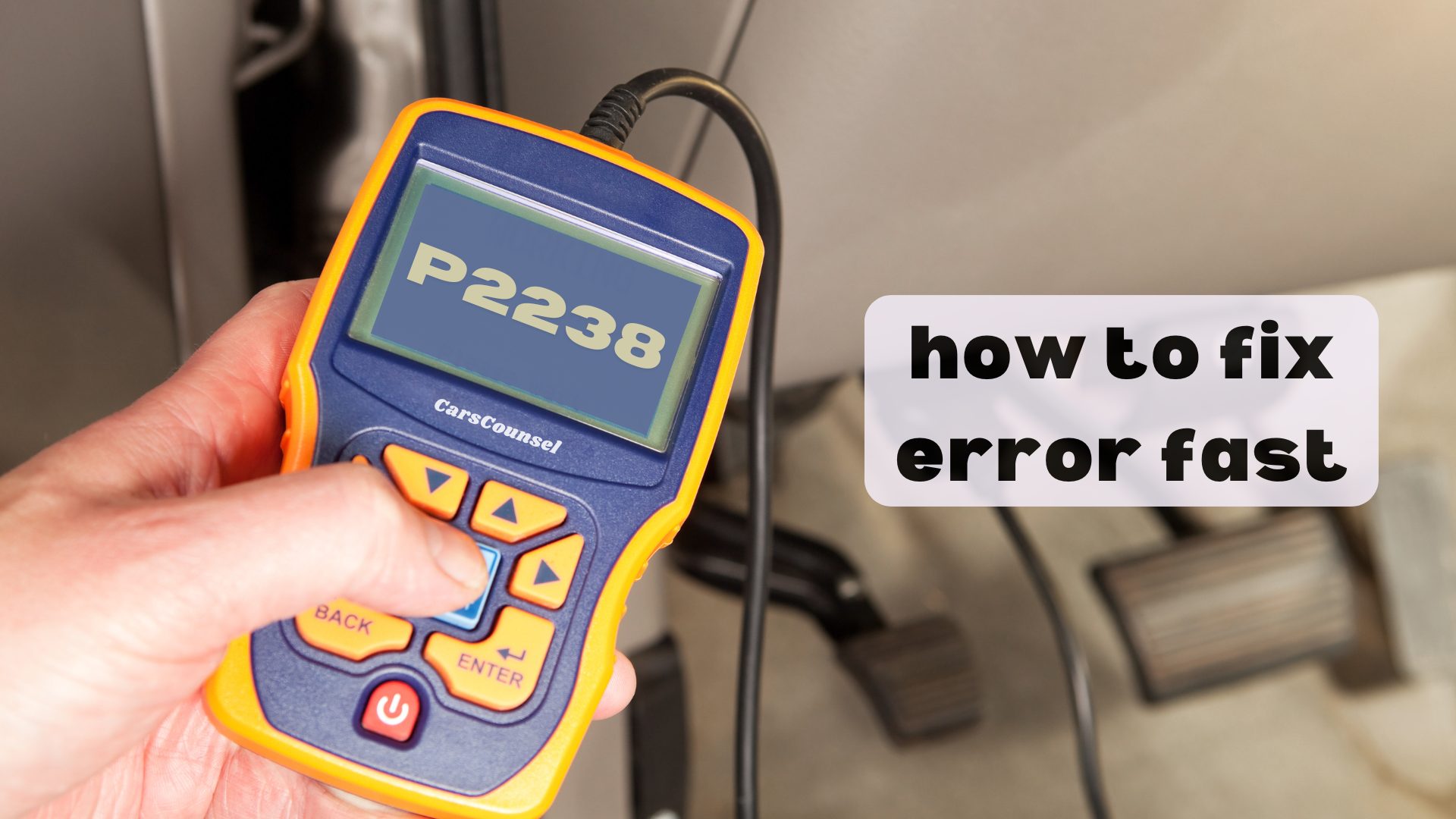
Among OBD-II trouble codes, P2238 is a generic SAE definition indicating an O2 Sensor Positive Current Control Circuit Low on Bank 1 Sensor 1. It means the control module detected a voltage signal below the normal operating range.
Because this code points to a specific circuit condition, the exact diagnostic path requires testing the sensor, wiring, and connectors. The code alone does not prove the sensor itself has failed.
Quick Navigation
Key Takeaways
- Condition detected: The PCM identified a low voltage condition in the positive current control circuit for the Bank 1 Sensor 1 oxygen sensor.
- Electrical checks required: Diagnosis involves inspecting the wiring harness, testing circuit continuity, and verifying the sensor.
- System impacts: A fault in this circuit prevents the PCM from accurately reading the air-fuel ratio, potentially affecting fuel trims and emissions.
- Component testing: The wiring, connectors, and oxygen sensor must be evaluated to isolate the exact point of the low voltage fault.
P2238 Code Description and Implications
P2238 is a generic SAE definition for O2 Sensor Positive Current Control Circuit Low Bank 1 Sensor 1. Modern vehicles use wideband air-fuel ratio sensors that require a precise positive current control circuit to measure oxygen content accurately.
When the powertrain control module detects that the voltage or current in this specific control circuit is below the expected threshold, it stores P2238. This indicates a short to ground, an open circuit, or a failed sensor element.
Common Causes of the P2238 Code
- Damaged or chafed wiring: The harness routing to the upstream oxygen sensor is exposed to extreme exhaust heat and road debris, making it vulnerable to melting or physical damage.
- Corroded or loose connectors: Moisture intrusion at the sensor connector can cause terminal corrosion, disrupting the control circuit.
- Failed oxygen sensor: The internal pump cell or heater element of the wideband sensor may fail internally, creating a low resistance or shorted condition.
- Short to ground: The control wire may be pinched against the exhaust manifold or chassis, causing a direct short to ground.
Symptoms Associated With P2238
Possible symptoms include:
- Illuminated Check Engine Light (MIL).
- Poor fuel economy due to the PCM defaulting to a rich fuel map or failing to adjust fuel trims accurately.
- Rough idle or hesitation during acceleration.
- Increased exhaust emissions and potential failure of an emissions test.
Diagnosing the P2238 Trouble Code
Diagnosing an oxygen sensor circuit low code requires a digital multimeter, a scan tool, and the vehicle’s specific wiring diagrams. The first step is to verify the exact factory definition.
A professional diagnostic workflow includes:
- Scan for related codes: Check for additional O2 sensor, fuel trim, or heater circuit codes.
- Visual inspection: Inspect the wiring harness from the PCM to the Bank 1 Sensor 1 oxygen sensor for heat damage, chafing, or corrosion.
- Monitor live data: Use a scan tool to view the O2 sensor voltage and current PIDs. A stuck or erratic reading indicates a circuit or sensor fault.
- Test the circuit: Use a digital multimeter to check the control circuit for continuity and verify it is not shorted to ground according to the manufacturer procedure.
Repairing the P2238 Issue
Repairs must follow confirmed diagnosis. Never replace the powertrain control module based solely on the presence of a P2238 code.
- Wiring repair: If the harness is melted or chafed, repair the wires using high-temperature solder and heat shrink tubing.
- Connector replacement: If the plug is corroded, replace the pigtail connector with a component meeting the correct vehicle specification.
- Sensor replacement: If the sensor fails resistance or current testing, replace the Bank 1 Sensor 1 oxygen sensor.
- Clear and retest: Clear the codes and verify the live data PID responds correctly during a test drive.
Cost Considerations for P2238 Repairs
The cost to resolve a P2238 code depends heavily on the root cause, diagnostic time, and component accessibility.
Cost depends on diagnostic time, component accessibility, required parts, programming requirements, and labor.
Prevention Strategies for Future Occurrences
While internal sensor failures are not always predictable, you can protect the circuit from common environmental damage.
- Protect the wiring harness: Ensure the sensor wiring is securely routed away from hot exhaust manifolds and sharp chassis edges.
- Inspect during service: When performing exhaust or spark plug service, visually check the oxygen sensor wiring for early signs of heat degradation.
Troubleshooting Tips and Best Practices
- Do not assume the sensor is dead: A circuit low code frequently points to a chafed wire shorting to the exhaust or chassis. Always verify circuit continuity and inspect the harness first.
- Verify Bank and Sensor location: Ensure you are testing Bank 1 Sensor 1. Bank 1 is the engine bank containing cylinder number one, and Sensor 1 is the upstream sensor located before the catalytic converter.
- Check for TSBs: Some manufacturers issue Technical Service Bulletins for updated wiring harness shields or revised sensor designs to address chronic heat damage.
More OBD-II Codes
| P2200 | P2227 | P2228 | P2229 |
| P2237 | P2099 | P2261 | P2262 |
| P2263 | P2401 | P2402 | P2404 |
| P0130 | P0131 | P0132 | P0133 |
| P0135 | P0136 | P0171 | P0172 |
| P0174 | P0420 | P0430 | P0300 |
Frequently Asked Questions
Can a wiring short cause a P2238 code?
Yes. The control wire for the oxygen sensor routes near extremely hot exhaust components. If the insulation melts and the bare wire touches the metal chassis or exhaust, it creates a short to ground, triggering the circuit low code.
Is it safe to drive with a P2238 code?
You can typically drive to a repair facility, but you may experience reduced fuel economy. If the PCM cannot monitor the air-fuel ratio accurately, it will default to a rich fuel map, which can eventually damage the catalytic converter over time.
Will replacing the oxygen sensor fix a P2238 code?
It will fix the issue if the internal pump cell or heater element has failed short. However, if the root cause is a melted wire or corroded connector, replacing the sensor will not resolve the circuit low fault. Proper diagnosis is required.
Does P2238 mean my PCM needs to be replaced?
No. P2238 indicates a low voltage condition in a specific sensor control circuit. The root cause is usually heat-damaged wiring, a corroded connector, or a failed sensor. The PCM should only be considered after verifying circuit integrity.
Where is Bank 1 Sensor 1 located?
Bank 1 is the side of the engine that contains cylinder number one. Sensor 1 is the upstream oxygen sensor or air-fuel ratio sensor, typically located on the exhaust manifold or the exhaust pipe immediately before the catalytic converter.
What Should You Do About the P2238 Code?
Because the P2238 code indicates a low voltage fault in the Bank 1 Sensor 1 oxygen sensor positive current control circuit, it requires verifying the wiring and sensor before replacing components. Confirm the exact factory definition for your vehicle.
Inspect the wiring harness for heat damage, check the connectors, and test the relevant system and components. Follow the manufacturer’s diagnostic procedure to isolate the faulty component, repair the confirmed root cause, and verify the repair.

